Ashab-e-Kahf
Abstract
The account of Ashab-e-Kahf, or the People of the Cave, as described in Surah Al-Kahf (verses 9–26) of the Qur'an, is one of the most profound interplays between divine revelation and scientific inquiry. The account, embedded as it is in spiritual symbolism, is presented with striking attributes that are consistent with contemporary scientific knowledge. Although genuine Hadith citations regarding the Ashab-e-Kahf are scarce, the Qur'an offers subtle details such as their long sleep lasting more than three centuries, the safeguarding angle of sunlight at the entrance to the cave, their routine physical movement while asleep, and the enigmatic appearance of a guarding dog. These facts, when viewed from the perspective of modern science, show intriguing similarities: the process of suspended animation or cryptobiosis echoes the magical sleep; the turning at regular intervals corresponds to the modern medical intervention to avoid pressure ulcers in comatose patients; and the deliberate path of the sun corresponds to the natural thermal balance necessary for long-term biological conservation. Furthermore, the mathematical harmony between 300 solar years and 309 lunar years illustrates an inherent astronomical consciousness in Qur'anic literature. This abstract seeks to explore these connections, positing that the Ashab-e-Kahf story not only provides a religious lesson on belief, perseverance, and divine favour but also indirectly presents concepts in biology, astronomy, and thermodynamics centuries before their scientific codification. This fusion of science and faith opens the door to enhanced interdisciplinary discovery, underscoring the Qur'an's ability to cross temporal and disciplinary borders.
Introduction
Over the ages, religious scriptures have existed not just as guides for spiritual edification but also as treasure houses of deep wisdom that frequently overlap the spaces of science, philosophy, and human knowledge. Perhaps one of the most compelling instances of this overlap is the tale of Ashab-e-Kahf, the People of the Cave, found in the Holy Qur'an, that is, in Surah Al-Kahf (Chapter 18, verses 9–26). This is a story firmly rooted in Islamic culture and describes a band of virtuous young men who fled to a cave in search of protection from the religious oppression of an oppressive era. By an act of divine clemency, Allah induced them into a miraculous slumber for more than three centuries, keeping them alive and protecting them from the vicissitudes of their epoch. The tale is spiritual as well as allegorical, representing unshakeable belief, heavenly guardianship, and the victory of truth over deceit. Although the Qur'an is the primary source of this narrative, some authentic Hadiths in Sahih al-Bukhari and Sahih Muslim emphasize the spiritual importance of Surah Al-Kahf, particularly regarding protection against the test of Dajjal (the Antichrist), while adding little additional narrative background about the sleepers themselves. Even in the absence of copious Hadith-based explication, the Quranic verses present us with evocative, specific detail that stimulates not only theological contemplation but also scientific inquiry. Over the past few decades, advances in the biological sciences, neuroscience, astrophysics, and clinical research have revealed fascinating avenues for the modern reinterpretation of ancient themes. Ashab-e-Kahf does not lag behind any of them.
Some of the main attributes outlined in the Qur'an, i.e., their long sleep, the way their bodies rotate, the cave facing away from sunlight, and precise conversion of solar to lunar years, reflect modern scientific principles. For instance, the case of suspended animation or cryptobiosis in animals, the effect of sunlight on thermoregulation, and the need for body movement to avoid tissue deterioration are all well established in contemporary science, presenting surprising analogies to the Quranic narrative. In addition, the passage describing the precise time they slept "three hundred years, and they added nine" (Qur'an 18:25) features a correct differentiation between the solar and lunar calendar systems. This is no less than the expression of a greater level of astronomical consciousness and also mirrors the Qur'an's complex interaction with natural processes. In the same vein, reference to a dog by the mouth of the cave is not just a plot detail; it evokes symbolic and physiological readings of animal behaviour and fidelity, particularly in guardianship roles. This opening thereby sets the stage for an interdisciplinary investigation: a scientific and theological interpretation of the Ashab-e-Kahf narrative. It endeavours to show that, rather than being a simple spiritual allegory, this Qur'anic passage can also impart subtle biological and cosmological messages, possibly even hinting at yet-unknown phenomena. By comparing scriptural accounts with scientific principles such as stasis, the movement of the sun, the prevention of biological decay, and the calculation of astronomical time, we can better appreciate both the divine wisdom contained in the Qur'an and the eternal secrets it holds that still resonate profoundly in our scientific age.
Qur'anic Account of Ashab-e-Kahf:
The story of Ashab-e-Kahf is detailed in Surah Al-Kahf (18:9–26). Key elements include:
- Seeking Refuge: A group of young believers fled persecution and took shelter in a cave, praying for divine mercy and guidance. “When the youths took refuge in the cave and said, ‘Our Lord, grant us mercy from Yourself and guide us in our affair.’” (Qur'an 18:10)
- Prolonged Sleep: Allah caused them to sleep for an extended period. “So We cast [a cover] over their ears within the cave for a number of years.” (Qur'an 18:11)
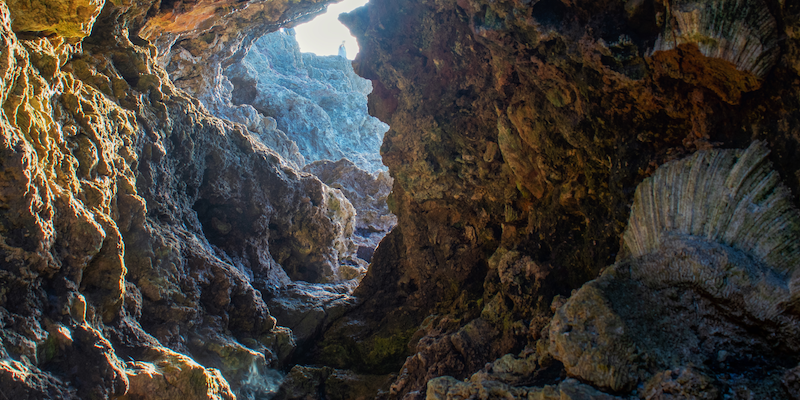
- Sunlight's Path: The sun's movement meant it did not strike them directly. “And you would have seen the sun when it rose, inclining away from their cave on the right, and when it set, passing away from them on the left...” (Qur'an 18:17)
- Physical Movement: They were turned from side to side during their sleep. “And We turned them to the right and to the left...” (Qur'an 18:18)
- Duration of Sleep: They slept for 300 years, then added 9 more. “And they remained in their cave for three hundred years and exceeded by nine.” (Qur'an 18:25)
- Awakening and Discovery: Upon waking, they believed they had slept for a day or part of one. “They said, ‘How long have you remained [here]?’ They said, ‘We have remained a day or part of a day.’” (Qur'an 18:19)
While the Qur'an provides the primary narrative, certain Hadiths emphasize the significance of Surah Al-Kahf:
Protection from Dajjal:
“Abu Darda reported: The Prophet, peace and blessings be upon him, said, “Whoever memorizes ten verses from the beginning of Surat al-Kahf will be immune to the False Messiah.” In another narration, the Prophet said, “From the last ten verses of Surat al-Kahf.” Source: Ṣaḥīḥ Muslim 809 Grade: Sahih (authentic) according to Muslim
As-Sakina:
“A man was reciting Surat Al-Kahf, and his horse was tied with two ropes beside him. A cloud came down and spread over that man, and it kept on coming closer and closer to him till his horse started jumping (as if afraid of something). When morning came, the man came to the Prophet (S.A.W) and told him about that experience. The Prophet (صلى الله عليه وسلم) said, "That was As-Sakina (tranquillity) which descended because of (the recitation of) the Qur'an."
Sahih al-Bukhari 5011 In-book reference: Book 66, Hadith 33
Comments (2)